

OCR PDF technology has become an essential part of modern document processing, allowing printed or handwritten content to be converted into editable and searchable text. An OCR PDF system works by scanning images of text and converting them into machine-readable characters.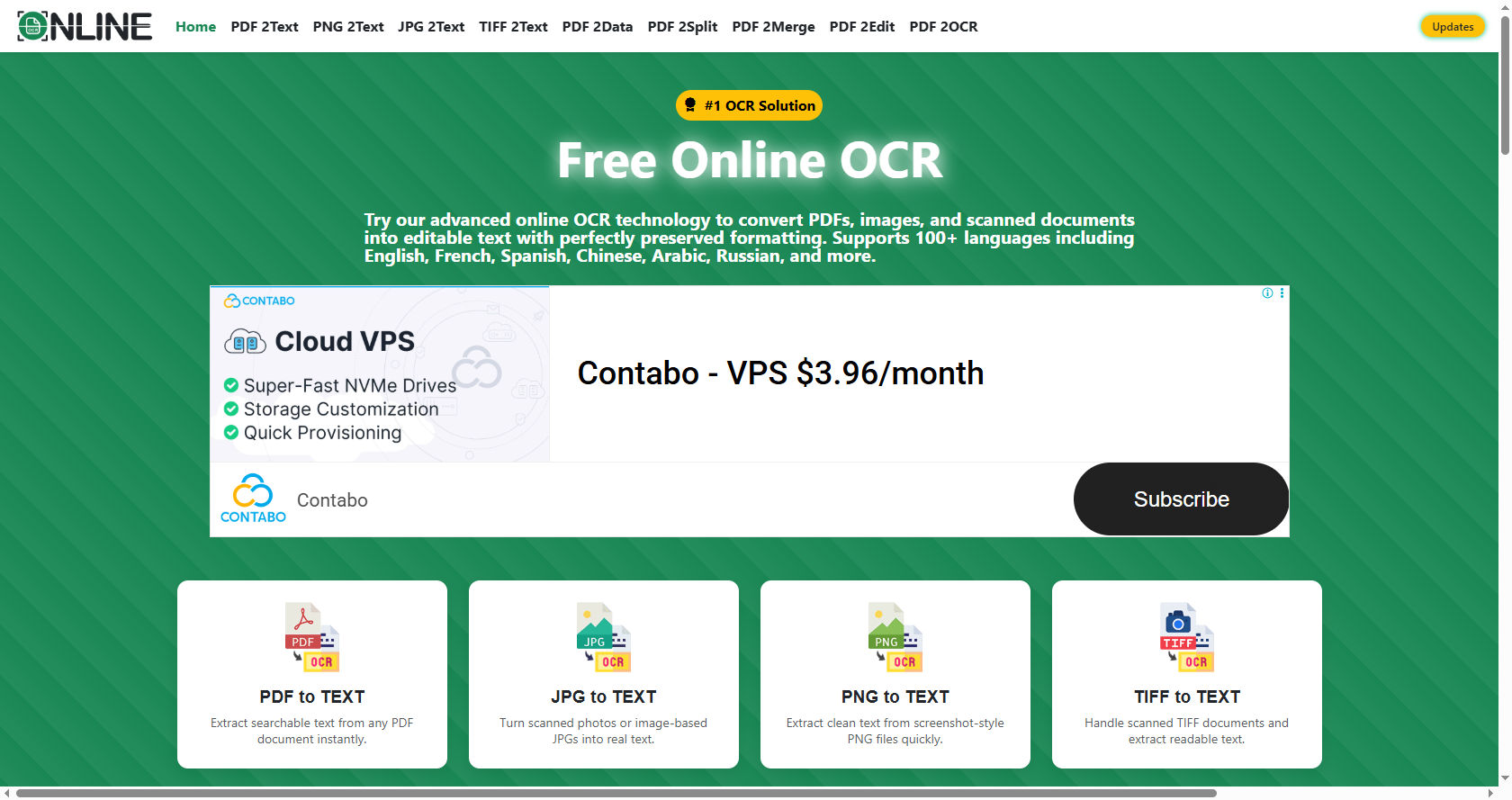
In today’s digital world, an OCR PDF is widely used in offices, schools, and industries to reduce manual typing work. However, many people still ask how reliable an OCR PDF really is when it comes to accuracy.
The accuracy of an OCR PDF depends on many factors such as image quality, font style, language, and even the software used. While an OCR PDF can reach very high accuracy with clean documents, it may struggle with blurred scans or complex layouts. Understanding how an OCR PDF works helps users set realistic expectations and improve results.
In this guide, we will explore how an OCR PDF functions, what affects its accuracy, and how it is used in real-life situations. You will also learn about its limitations and future improvements. By the end, you will have a complete understanding of whether an OCR PDF is reliable enough for your needs.
What is OCR PDF technology?
An OCR PDF is a type of digital file that has been processed using Optical Character Recognition (OCR) technology. This process converts scanned images of text into editable digital text inside a PDF file. Without an OCR PDF, scanned documents remain just images that cannot be edited or searched.
The main purpose of an OCR PDF is to make documents more useful. For example, instead of retyping a printed book, an OCR PDF allows users to copy and search text directly. This saves time and improves productivity.
An OCR PDF is commonly used in libraries, banks, legal offices, and educational institutions. It helps convert paper documents into digital formats that are easier to store and manage.
Modern tools have made OCR PDF processing much faster and more accurate than before. However, even the best systems still face challenges depending on document quality. That is why understanding how an OCR PDF works is important before relying on it completely.
How OCR PDF works step by step
The process behind an OCR PDF may seem complex, but it can be broken down into simple steps. Each step improves how accurately the OCR PDF recognizes text.
First, the document is scanned or uploaded into the system. The OCR PDF tool converts the page into an image format for processing.
Next, the system analyzes the image and identifies areas containing text. In an OCR PDF, this step is crucial because it separates text from graphics.
Then, the software breaks the text into characters and compares them with stored patterns. This is where the OCR PDF begins recognizing letters, numbers, and symbols.
After recognition, the system reconstructs the text into digital format. The OCR PDF ensures that the structure of paragraphs and spacing is preserved as much as possible.
Finally, the output is saved as a searchable PDF file. A completed OCR PDF allows users to highlight, copy, and edit text easily.
Each of these steps affects how accurate the final OCR PDF will be.
Factors affecting OCR PDF accuracy
The accuracy of an OCR PDF is not always the same. Several important factors influence how well it performs.
One major factor is image quality. A clear, high-resolution scan produces a more accurate OCR PDF than a blurry one. Poor lighting or low-quality scanning can reduce accuracy.
Font style also plays a big role. Simple fonts help an OCR PDF recognize characters more easily, while decorative fonts can confuse the system.
Language complexity is another factor. An OCR PDF may perform better with widely supported languages compared to rare or complex scripts.
Page layout matters too. Documents with columns, tables, or mixed content can make an OCR PDF less accurate.
Finally, the OCR engine itself affects performance. Advanced systems produce a more reliable OCR PDF than older software.
Because of these factors, not every OCR PDF delivers the same level of accuracy.
Accuracy levels in OCR PDF systems
An OCR PDF can achieve different levels of accuracy depending on conditions. In ideal situations, a high-quality OCR PDF can reach up to 99% accuracy, especially with printed text.
For clean printed documents, an OCR PDF usually performs very well. It can easily recognize standard fonts and simple layouts.
However, handwritten text is more challenging. In such cases, an OCR PDF may drop to 80–90% accuracy or even lower.
Complex documents also affect performance. When an OCR PDF processes tables, charts, or multi-column pages, it may misinterpret structure.
Despite these challenges, modern tools continue to improve. Many advanced OCR PDF systems now use artificial intelligence to increase accuracy over time.
Still, users should always review the final OCR PDF output to ensure correctness.
Common errors in OCR PDF conversion
Even advanced systems can make mistakes when creating an OCR PDF. Understanding these errors helps users correct them.
One common issue is character misreading. For example, an OCR PDF may confuse “O” with “0” or “l” with “1”.
Another problem is missing text. Sometimes, an OCR PDF fails to detect faint or damaged parts of a document.
Formatting errors are also common. An OCR PDF may merge paragraphs or break sentences incorrectly.
Language misinterpretation can also occur. If the OCR PDF is not trained for a specific language, it may produce incorrect words.
Finally, image distortion can lead to poor results. Skewed pages often reduce the quality of an OCR PDF output.
These errors show that while an OCR PDF is powerful, it is not always perfect.
How to improve OCR PDF accuracy
There are several ways to improve the performance of an OCR PDF system.
First, always use high-quality scans. Clear images help an OCR PDF detect text more accurately.
Second, choose the right OCR software. Advanced tools produce a better OCR PDF with fewer errors.
Third, straighten and clean documents before scanning. A well-prepared image improves OCR PDF accuracy significantly.
Fourth, use appropriate language settings. This helps the OCR PDF recognize words correctly.
Fifth, avoid using decorative fonts in scanned documents. Simple fonts allow an OCR PDF to perform better.
Finally, always proofread the final output. Even a high-quality OCR PDF may contain small mistakes.
By following these steps, users can greatly improve the reliability of an OCR PDF.
Use cases of OCR PDF technology
An OCR PDF is used in many real-world applications.
In education, students use OCR PDF tools to convert textbooks into editable notes. This makes studying easier.
In business, companies rely on OCR PDF systems to digitize invoices and contracts. This reduces paperwork and saves time.
In healthcare, an OCR PDF helps convert patient records into digital formats for better organization.
In legal fields, an OCR PDF is used to scan case files and make them searchable.
Even government offices use OCR PDF technology to manage large archives of documents.
These examples show how important an OCR PDF has become in modern digital systems.
Limitations of OCR PDF technology
Despite its advantages, an OCR PDF has some limitations.
One limitation is accuracy with handwritten text. An OCR PDF still struggles to correctly interpret different handwriting styles.
Another limitation is document quality dependence. A low-quality scan results in a poor OCR PDF.
Language support can also be limited. Some rare languages may not be fully supported by every OCR PDF tool.
Processing speed can vary depending on file size. Large documents may take longer to convert into an OCR PDF.
Security concerns may also arise when using online OCR PDF tools, especially for sensitive documents.
These limitations show that while an OCR PDF is powerful, it is not perfect for every situation.
Future of OCR PDF technology
The future of OCR PDF technology looks very promising.
Artificial intelligence is already improving how an OCR PDF recognizes text. Machine learning helps systems learn from mistakes and improve accuracy.
In the future, an OCR PDF may become nearly 100% accurate even with handwritten notes and complex layouts.
Cloud-based systems will also make OCR PDF processing faster and more accessible.
We can also expect better multilingual support in future OCR PDF tools.
As technology improves, the OCR PDF will become an even more important part of digital transformation.
Conclusion
An OCR PDF is a powerful tool that transforms printed or scanned documents into editable and searchable digital files. Its accuracy can be extremely high under ideal conditions, but it still depends on factors like image quality, font type, and document structure.
While an OCR PDF is not perfect, it continues to improve with advancements in artificial intelligence and machine learning. For most everyday uses, it provides more than enough accuracy to save time and effort.
In summary, an OCR PDF is reliable, efficient, and increasingly intelligent, making it a valuable technology for both personal and professional use.