

A Personal AI companion is a new type of digital assistant designed to understand your behavior, preferences, and needs over time.
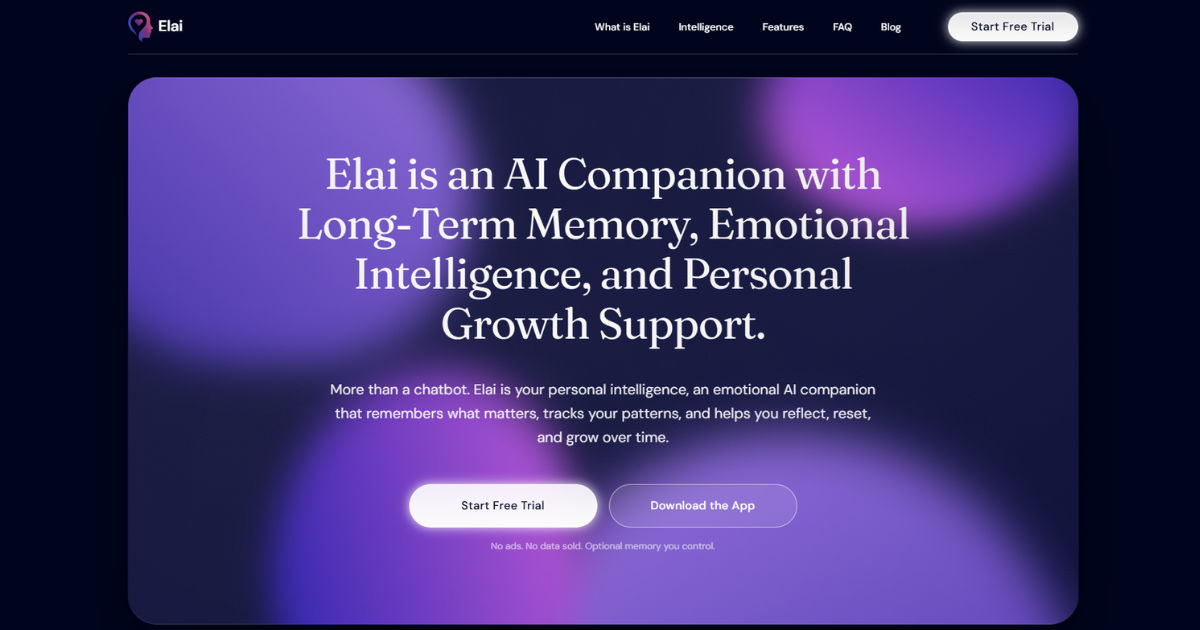 A Personal AI companion is not just a chatbot—it learns from interactions and becomes more personalized the more you use it. Many people today rely on a Personal AI companion for study help, emotional support, productivity, and daily planning.
Unlike traditional apps that stay the same for every user, a Personal AI companion changes and evolves based on how you interact with it. This means the experience becomes more natural, more helpful, and more aligned with your lifestyle.
A Personal AI companion can remember your habits, understand your communication style, and even predict what you might need next.
In this guide, we will explore in detail how a Personal AI companion adapts to you, what technologies make it possible, and how it improves your daily life.
We will break everything down in a simple way so even a 12th-grade student can easily understand how a Personal AI companion works and why it is becoming so popular in today’s digital world.
Understanding the Core Idea of Adaptation
A Personal AI companion adapts by continuously learning from user interactions. This means every message, command, or question you ask helps shape future responses. Over time, the system builds a behavioral profile that makes the experience more personal.
At its core, a Personal AI companion uses machine learning algorithms. These algorithms detect patterns in your language, preferences, and activity. For example, if you often ask about study tips, the Personal AI companion will prioritize educational suggestions in future conversations.
Another important part of adaptation is memory. A Personal AI companion may remember your interests, favorite topics, or daily routines. This memory helps it respond in a more relevant and meaningful way. Instead of treating every interaction as new, the Personal AI companion builds continuity.
Context awareness is also essential. A Personal AI companion understands not just what you say, but how and when you say it. This allows it to adjust tone, suggestions, and responses based on the situation.
Data Collection and Learning Process
To adapt effectively, a Personal AI companion collects different types of data during interactions. This includes text input, usage patterns, feedback signals, and engagement behavior. The goal is not to invade privacy but to improve personalization.
One major learning method used by a Personal AI companion is reinforcement learning. When a response is helpful, users tend to continue the conversation. When it is not useful, users may stop or change topics. The system learns from this behavior and improves over time.
Another key method is supervised learning. Developers train the Personal AI companion using large datasets so it can understand language, context, and intent. This training helps it respond intelligently even in new situations.
The Personal AI companion also uses natural language processing (NLP) to understand human communication. NLP helps it interpret slang, emotions, and different writing styles. As a result, the Personal AI companion can talk in a more natural and human-like way.
Over time, all this learning combines to make the Personal AI companion more accurate, helpful, and personalized.
Personalization Through User Behavior
A major way a Personal AI companion adapts is by analyzing user behavior. Every user is different, and the system recognizes these differences.
For example, if you use a Personal AI companion mostly for productivity tasks, it will start offering reminders, schedules, and task management tools. If you use it for entertainment, it may suggest jokes, stories, or creative content.
The Personal AI companion also learns your communication style. If you prefer short answers, it will respond briefly. If you like detailed explanations, it will provide longer responses. This flexibility makes the experience more comfortable and natural.
Another important factor is timing. A Personal AI companion may learn when you are most active and adjust notifications or suggestions accordingly. This helps reduce interruptions and improves usefulness.
Even emotional tone can be detected. A Personal AI companion can sense if you are stressed, happy, or confused based on your messages. It then adjusts its responses to match your emotional state.
Memory and Long-Term Adaptation
Memory plays a crucial role in how a Personal AI companion adapts. Without memory, every interaction would feel disconnected. With memory, the experience becomes continuous and meaningful.
A Personal AI companion can store important details such as your goals, preferences, and past conversations. This allows it to provide consistent support over time.
For example, if you tell a Personal AI companion that you are preparing for exams, it can later remind you about study plans or offer revision tips. This shows how memory improves usefulness.
Long-term adaptation also means evolving with your changing needs. A Personal AI companion does not stay fixed. If your interests change, it gradually updates its understanding of you.
Privacy is an important part of memory systems. A responsible Personal AI companion only stores necessary information and ensures it is used to improve user experience, not for harm.
Emotional Intelligence and Human-Like Interaction
One of the most advanced features of a Personal AI companion is emotional intelligence. This means it can recognize and respond to human emotions.
A Personal AI companion uses sentiment analysis to detect emotional tone in messages. Words, punctuation, and context help it understand whether a user is happy, sad, frustrated, or excited.
Once emotions are detected, the Personal AI companion adjusts its responses. For example, if a user is stressed, it may respond in a calm and supportive tone. If a user is excited, it may respond with enthusiasm.
This emotional adaptation helps build trust between the user and the Personal AI companion. It feels more like a conversation with a friend rather than a machine.
Over time, the Personal AI companion becomes better at recognizing subtle emotional cues. This makes interactions more meaningful and supportive.
Context Awareness and Real-Time Adaptation
Context awareness is another powerful feature of a Personal AI companion. It allows the system to understand the situation behind each conversation.
For example, if you are asking about weather in the morning, the Personal AI companion may suggest clothing tips or travel advice. If you are planning a project, it may offer structured steps or reminders.
A Personal AI companion also adapts based on device usage. If you are using it on mobile, responses may be shorter and more direct. On a computer, it may provide more detailed explanations.
Real-time adaptation also means adjusting to conversation flow. If you switch topics quickly, the Personal AI companion can follow along without confusion.
This makes interactions feel smooth and intelligent, improving overall user experience.
Continuous Improvement and Feedback Loops
A Personal AI companion does not improve randomly. It improves through continuous feedback loops.
Every interaction provides feedback, either directly or indirectly. If users engage positively, the system learns that the response was useful. If users disengage, it learns that improvements are needed.
Some Personal AI companion systems also allow explicit feedback. Users can rate responses or correct mistakes. This helps the system improve faster.
Over time, the Personal AI companion becomes more accurate, efficient, and aligned with user expectations.
Continuous updates from developers also enhance performance. These updates help the Personal AI companion stay up to date with new information and technologies.
Ethical Considerations and Privacy
As a Personal AI companion becomes more advanced, ethical concerns become important. Privacy is one of the biggest issues.
Users need to trust that their data is safe. A responsible Personal AI companion ensures that personal information is protected and not misused.
Transparency is also important. Users should understand how the Personal AI companion learns and adapts.
Another concern is dependency. While a Personal AI companion is helpful, users should maintain balance and not rely on it for everything.
Developers aim to create systems that are helpful but also respectful of user boundaries.
Future of Personal AI Companion Technology
The future of the Personal AI companion is very promising. As technology improves, these systems will become even more personalized and intelligent.
Future versions of a Personal AI companion may include deeper emotional understanding, better memory systems, and stronger predictive abilities.
They may also integrate with more devices, such as smart homes, wearable technology, and educational platforms. This will make the Personal AI companion a central part of daily life.
Another future development is improved human-like conversation. A Personal AI companion may eventually feel almost like talking to a real person.
As AI continues to evolve, the Personal AI companion will become more useful in education, healthcare, business, and personal development.
Conclusion
A Personal AI companion adapts to users through learning, memory, emotional intelligence, and context awareness. It continuously improves by analyzing behavior and feedback, making each interaction more personalized and meaningful.
From understanding emotions to remembering preferences, a Personal AI companion becomes more helpful over time. It transforms from a simple digital tool into a personalized assistant that grows with the user.
As technology advances, a Personal AI companion will become even more intelligent, offering deeper support in daily life. However, it is also important to use it responsibly and maintain a healthy balance.
Overall, the adaptability of a Personal AI companion is what makes it powerful, useful, and unique in the modern digital world.