

In the ever-evolving landscape of industrial automation and procedure control, the importance of monitoring and managing various parameters such as fluid degrees, flow prices, and pressure can not be overemphasized. Technologies such as ultrasonic liquid level sensors, differential pressure (dp) transmitters, and numerous types of flow meters have actually emerged as crucial components for making certain operational performance and safety and security in markets ranging from water treatment to oil and gas.
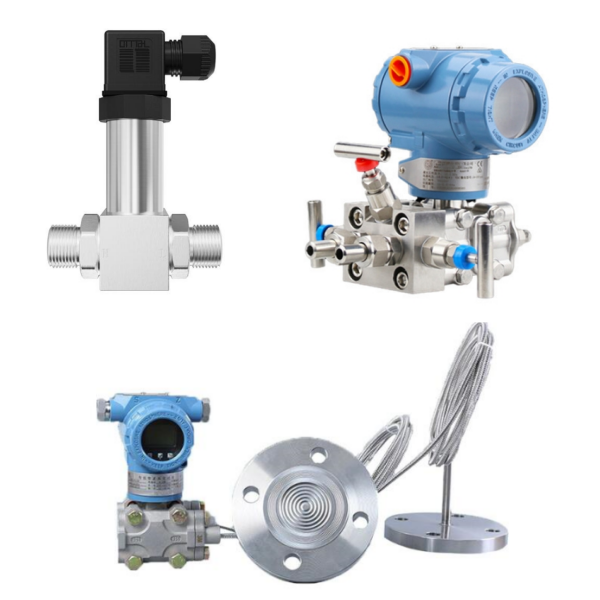
Complementing the functionality of level sensing, dp transmitters are essential for determining pressure distinctions throughout various points in a system, providing crucial understandings into flow rates and liquid characteristics. They play an essential role in applications such as filter monitoring or liquid level measurement where recognizing the pressure drop can notify operators of the system’s problem. The differential pressure transmitter, for example, aids establish the flow rate in a pipe by computing the pressure differential across a blockage, consequently sustaining procedure optimization and power efficiency.
When it involves fluid flow measurement, one can pick from a variety of flow meter types, each fit for details applications and operating problems. Inline water flow meters, as an example, are integral to countless systems as they supply real-time measurements of liquid flow in an uncomplicated, direct way. On the various other hand, magnetic water flow meters utilize electro-magnetic principles to measure rate and can be specifically important in applications where the liquid being measured is conductive. Both types of flow meters aid industries follow regulatory criteria by making sure accurate dimensions which are critical for payment, inventory monitoring, and procedure monitoring.
Discover dp transmitter exactly how precise measurement and sensing technologies, such as ultrasonic level sensors, differential pressure transmitters, and flow meters, play an essential role in improving operational effectiveness and safety and security in industrial automation and process control.
Another innovative service for flow measurement is the clamp-on flow meter, which can be connected externally to a pipe, supplying a non-invasive methods of gauging flow without interrupting the system. This flexibility significantly simplifies setup and permits for fast deployment in existing systems without calling for modifications. Similarly, turbine-type flow meters provide accurate flow measurement by using rotating blades to assess the speed of liquid going through, offering well in applications where precision is extremely important.
For pressure monitoring and control, the diversity of pressure transducers readily available guarantees that there is a suitable gadget for nearly every application possible. Industrial pressure transducers are designed to stand up to extreme environmental problems while providing trustworthy pressure dimensions. For specialized requirements, there are vacuum pressure transducers, which supply boosted precision in gauging reduced stress, and absolute pressure transducers that measure pressure family member to a vacuum, making them excellent in scenarios where specific pressure requires to be known, such as in vacuum systems and high-altitude applications.
Torque transducers, consisting of rotary torque sensors, are likewise essential in applications involving rotational forces. These devices measure torque in mechanical systems, which is important for maximizing and understanding machine efficiency. The combination of torque measurement within a broader system enhances the capability to keep an eye on and manage industrial processes, leading to improved effectiveness and decreased downtime with predictive maintenance methods.
As we browse through varying temperatures and pressures in industrial procedures, the demand for high-temperature pressure sensors comes to be apparent. These specialized sensors can run in extreme conditions while offering crucial data to shield devices from failing. Technologies like submersible hydrostatic level transmitters are utilized in groundwater monitoring or aquaculture systems, offering precise level dimensions even when fully immersed. Guided radar level transmitters utilize radar modern technology to determine the range to a liquid’s surface area, giving trusted level measurement regardless of temperature or pressure variations, making them optimal for intricate industrial settings.
On top of that, high-temperature gas pressure sensors are essential for procedures including gases that require to be kept an eye on for pressure in contexts such as furnace or boiler operation. As industries require even more reliable and durable measurement services, the combination of different technologies, including guided wave radar level sensors, reinforces general system performance by enabling a lot more accurate and reputable information collection.
The release of advanced measurement devices is not full without considering the complexities included in their procedure and application. The working principle of a rotameter, which uses a float that drops and climbs within a cone-shaped tube, offers insight into flow rates by offering a direct visual indicator of flow via the setting of the float. This simplicity and directness make rotameters appropriate for low-pressure applications and small flow monitoring.
In the context of managing fuel levels in industrial settings, gasoline tank level monitoring systems play a crucial role in making sure that procedures continue to be uninterrupted while following ecological regulations. By incorporating level sensors and interaction modern technologies, these systems can use real-time information transmission, thereby enabling drivers to keep an eye on fuel usage and forecast when refueling will be required. The enhancing demand for sustainable practices in markets has emphasized the demand for accuracy in fuel management, highlighting the importance of including sophisticated monitoring innovations.
Discover flowmeter distributor exactly how precise measurement and sensing innovations, such as ultrasonic level sensors, differential pressure transmitters, and flow meters, play a vital function in enhancing operational performance and safety in industrial automation and procedure control.
When looking for these sophisticated measurement remedies, it is essential to partner with reliable flow meter producers, representatives, and suppliers that can give top quality tools backed by technical assistance. Whether you’re seeking pressure transmitter manufacturers for exact pressure control systems or checking out options for magnetic flow transmitters, choosing a trustworthy supplier is basic to accomplishing the wanted outcome in any type of industrial application. The growing market for these necessary devices showcases the essential duty they play in contemporary markets, assisting in both compliance and functional efficiency.
As technologies continue to enhance, recognizing the nuances of numerous gauging devices and exactly how they adjoin within a system will empower users to make informed choices, resulting in optimized processes. In particular, the advancement of smart pressure sensors and flow measurement devices, made to interface with modern industrial control systems, exhibits a shift in the direction of incorporated solutions that not only measure yet likewise supply workable information understandings.
In general, the synergy in between various measurement modern technologies promotes a setting conducive to improved productivity and reliability. Whether through progressed sensors, cutting-edge flow meters, or exact transducers, the future of industrial measurement and control is certainly headed toward greater class and efficiency, enabling sectors to fulfill the expanding demands of the global marketplace while prioritizing sustainability and safety and security. The development of these innovations signifies a move towards smarter operations, promising not just improved performance however also a reduction in resource usage, underscoring a commitment to advancing both productivity and ecological responsibility. As markets welcome these ingenious measurement options, the opportunities for improving operational circulations and guarding sources become virtually limitless.